

Utopia, California and Wildfires
Unravelling the Connections

The article we had scheduled for this week focused on the Kunming-Montreal agreement and the commitments to protect global biodiversity made in 2022 at COP15. However, in the wake of the devastating wildfires in California, specifically Los Angeles County, there are other things to talk about, like where, how, why, and what now?
Let’s break it down.
California’s Climate Structure
California is an unusually interesting geographical region in terms of climate. It has a mixture of five different climate types: Desert, Cool Interior, Steppe, Highland, and Mediterranean in proximity. Moreover, these climates exist nearby due to the state's varied topography, including coastal regions, mountain ranges, valleys, and deserts, making it a microcosm of climatic diversity.
In turn, this diversity makes it both an interesting, and varied place to live for humans and for the range of “other life” that found its way into the California bioregion over millennia. And, since it’s also the birthplace of many human great stories, like Hollywood, Silicon Valley, and the Las Vegas Strip, from the outside, the place has a sense of utopia to it.
Except, that in the last week, the Pacific Palisades has burned and one of the most wealthy and esteemed neighborhoods in the world has experienced firsthand the devastating impact of climate change.
Rinse and Repeat
In 2020 — which was 5 years ago and still feels like yesterday, the most devastating fire season in history took place in California. In fact, it was so bad that insurers just stopped underwriting wildfire damage in the state because the systemic risk to their portfolio book was too high. It’s happening elsewhere too, in Florida the flood risk is too much of a burden for insurance to cover it and over the last few years global reinsurance markets for catastrophe management have been shifted from insurers and reinsurers to the state; and ultimately to the public. Now, that the damage is deep and wide, nobody wants to pay the price, even in California. In fact, the super-wealthy are building bunkers elsewhere — and it’sobvious why: global risk is going up and they have the means.
On the other hand, is it worth eating this fear soup?
This week the Global Institute of Actuaries put out a report regarding planetary solvency which gives a very grounded view on the reasons we need to act. But here is the obvious one, the baseline for any civilization is a habitable home.
And, whether your home is in Orange County or in Diepsloot home matters — even if you’re dreaming of escaping to someone else’s utopia.
Extending the Notion of Home
Elon, now, arguably the most powerful individual in the history of civilization, would like to make Mars home too. And,he has made convincing arguments that utopia includes electric cars, Falcon rockets, Skynet Starlink, an everything app, and a role as Grand Vizier. His first escape to utopia was from Pretoria to California via Canada and the rest is old hat.

I think we can do better — and we can ask for better. We’re paying a high price for our cornucopia of comfort. And, everyone that is born after will pay that price, unless the story of humankind can find a redemption arc.
For some this arc involves funding the commons in new ways, exploring bioregionalism and rewilding, and building resilience and energy independence. A few years ago, it was carbon and that narrative is still playing out strongly. Our particular narrative is around biodiversity — preserving and building a different relationship with nature, Listening to the Earth. Any improvement in listening would be good.
But in the words of Donkey: Are we there yet?
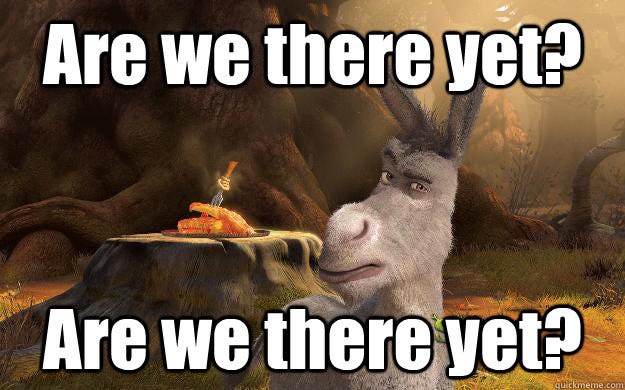
I don’t know.
Extending the notion of home to include the seafloor, humpback whales, elephants, beetles, rocks, waterways, meadows, streams, horseshoe crabs, great white sharks, penguins, and endangered insects is a place to start. There are probably others.
This isn’t a question of what else to do though — it’s a question of what not to do. I don’t think we’re stuck with Margaret Atwood’s city planners. They’d like us to believe we’re stuck with them, but the problem is choice. And, us being convinced that the only option is to preserve their utopias at all costs.
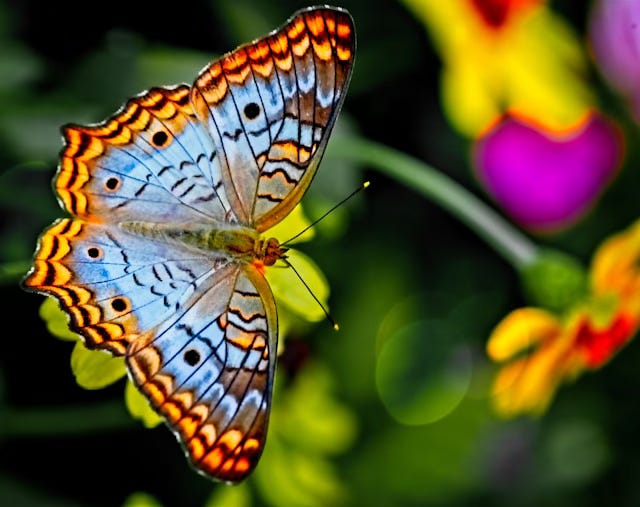
Given a choice between a red pill or a blue pill, I’d pick the beauty and complexity of a hummingbird or a butterfly.
Find me another way. Give me a third option: Optionality is what creates resilience.
Notes. This is an opinion piece. We’re a sensor company building bioacoustic sensors, connecting these to payment systems and working on integrating biodiversity reporting systems into rewilding projects and regenerative farms.
Reach out if you’d like to know more.
Thanks for reading!
Push the button.
Have a great weekend.